Gone Girl Energy: The Calculated Art of Disappearing From Hollywood — And Cashing In On Your Return
There is a specific type of celebrity news story that has been appearing with suspicious regularity over the last several years. It goes something like this: '[Major Star] Has Been Suspiciously Quiet Lately — Are They Okay?' The think pieces follow. The concerned fan threads multiply. The 'where are they now' energy reaches a low simmer across social media. And then, right on schedule, the star in question resurfaces with a project announcement that breaks the internet so completely that servers visibly sweat.
This is not a coincidence. This is a strategy. And it might be the most sophisticated visibility play in the modern entertainment business.
The Disappearing Act That Isn't
Let's be very clear about something: when a major celebrity 'goes quiet,' they are not sitting in a farmhouse in Vermont eating soup and rediscovering themselves. They are in meetings. They are in studios. They are on calls with managers, publicists, directors, and brand partners, methodically building the infrastructure for a return so perfectly timed it will feel spontaneous to everyone except the people who engineered it.
The celebrity fake-out — the strategic manufacturing of apparent irrelevance — has become one of Hollywood's most reliable playbook moves. And it works because it exploits something deeply human: we want what we can't have, and we appreciate what we almost lost.
Absence, it turns out, is the most powerful PR tool that money can't directly buy. But it absolutely can be manufactured.
The Beyoncé Blueprint
No conversation about strategic celebrity disappearance is complete without acknowledging the woman who essentially wrote the modern rulebook. Beyoncé's periodic withdrawals from the public eye — punctuated by surprise album drops, sudden tour announcements, and cultural moments so seismic they register on actual charts — have become the gold standard for how silence can be weaponized into maximum impact.
 Photo: Beyoncé, via cdn.musicboard.app
The 2013 surprise album drop didn't just break sales records. It rewrote the entire logic of how music gets released. No press cycle. No advance singles. No magazine covers building anticipation. Just: gone, gone, gone — and then suddenly everywhere all at once.
Every celebrity who has since gone deliberately dark on social media, declined press invitations, and 'stepped back' from public life has been, consciously or not, running a version of this play. The blueprint exists. The results are documented. The only variable is execution.
The Mechanics of Strategic Silence
So how does an intentional disappearance actually get built? It's more complicated than just logging off Instagram and waiting.
The first phase is the wind-down — a gradual reduction in public activity that feels organic rather than abrupt. Fewer posts. Shorter press appearances. A general sense of someone 'pulling back' rather than someone flipping a switch. This is important because a sudden, total blackout reads as crisis. A gradual fade reads as intentional, which makes the eventual return feel earned.
The second phase is the maintenance of ambient presence. This is the sneaky part. While the star themselves is largely invisible, their team is extremely busy. Strategic paparazzi sightings — just enough to confirm existence, not enough to satisfy curiosity. A single cryptic social post every few weeks. A friend or collaborator dropping a vague reference in an interview. The goal is to keep the ember alive without letting it become a fire. Yet.
The third phase is the controlled leak. Before any official announcement, something gets 'out.' A set photo. A snippet of audio. A source 'close to the project' telling a trade publication just enough to send the internet into speculation overdrive. By the time the actual announcement drops, the audience has already been doing the marketing for free.
The Adele Model vs. The Taylor Model
There are two dominant schools of strategic disappearance operating in contemporary pop culture, and they are worth distinguishing.
 Photo: Adele, via www.starstyle.com
The Adele Model is maximum silence, maximum impact. Long gaps between projects — sometimes years — during which Adele essentially ceases to exist as a public figure. No drama, no content, no ambient noise. And then: an album that sells like oxygen. The silence is so complete that the return functions almost as a cultural event in itself, independent of the actual music.
The Taylor Swift Model is more architecturally complex. The 'quiet period' is relative rather than absolute — Swift never fully disappears, but she controls the information flow with a precision that would impress a government intelligence agency. Easter eggs. Deliberate misdirection. Fan communities doing interpretive analysis of her sock choices. The 'quiet' isn't absence so much as it is the careful management of what gets released and when, creating an experience of scarcity in an era of total information saturation.
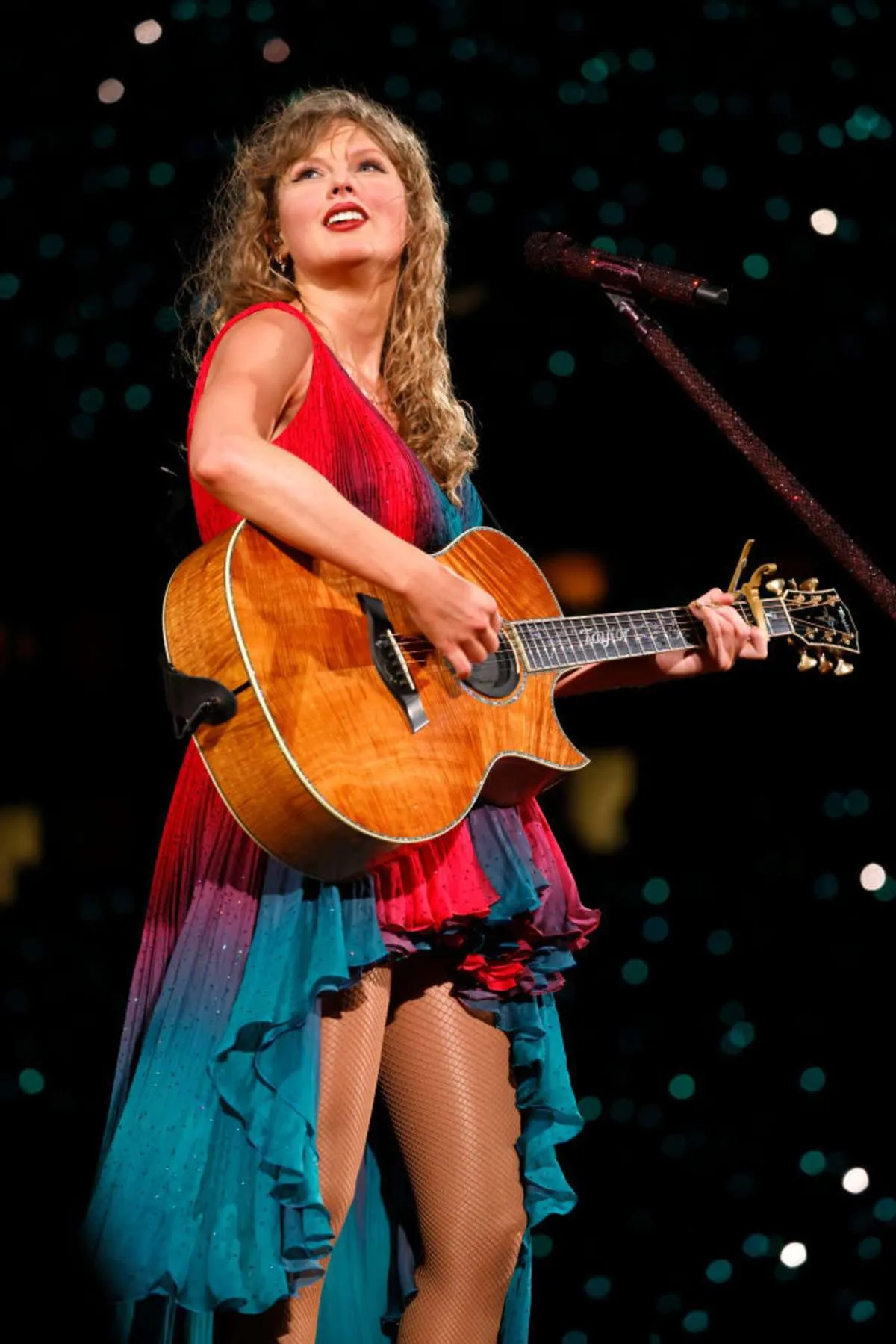 Photo: Taylor Swift, via pisco-bucket.s3.amazonaws.com
Both approaches share the same core logic: in an attention economy where everyone is screaming all the time, the most powerful thing you can do is stop screaming. The silence becomes the loudest possible statement.
The Risks of Playing Dead
It would be irresponsible to discuss the strategic disappearance without acknowledging that it can go spectacularly wrong. The window between 'intriguingly absent' and 'genuinely forgotten' is narrower than most celebrity teams would like to admit.
For every successful strategic comeback, there are quieter examples of stars who went dark and discovered that the culture had simply moved on without them. The audience that was supposed to be waiting anxiously had found three new obsessions in the interim. The project that was supposed to feel like a triumphant return landed in a landscape that had fundamentally changed shape.
Timing is everything, and getting it wrong is not a recoverable mistake. The comeback that arrives six months too late is just... a release. No fanfare. No cultural moment. Just a thing that exists now.
The Paradox at the Center of It All
Here is the genuinely fascinating thing about the celebrity fake-out: it requires an enormous amount of work to appear to be doing nothing. The stars who seem like they've checked out are frequently the ones logging the longest hours, making the most strategic decisions, and exercising the most careful control over their own narrative.
In Hollywood's current climate — where content is infinite, attention is fractured, and the algorithm rewards volume above almost everything — choosing to go quiet is an act of profound, calculated defiance. It's a bet that your absence will generate more desire than your presence would.
And when it works? It works completely.
So the next time your favorite celebrity seems to have fallen off the face of the earth, don't worry about them. They're fine. They're busy. And they're coming back for your wallet with absolutely surgical precision.