Stand Up and Be Forgiven: The Comedy Special Is Hollywood's Slickest Reputation Rehab — And We Keep Falling For It

Stand Up and Be Forgiven: The Comedy Special Is Hollywood's Slickest Reputation Rehab — And We Keep Falling For It
There is a specific moment in almost every celebrity comeback comedy special where the tone shifts. The jokes have been landing. The crowd is warm. The performer seems loose, self-deprecating, genuinely human. And then — there it is. The bit. The one where they address The Thing. The scandal, the cancellation, the public implosion that everyone in the room has been thinking about since the ticket confirmation email hit their inbox.
They make a joke about it. The crowd laughs. You laugh. And somewhere in the back of your brain, a small but significant switch flips from 'person I was angry at' to 'person I find charming again.'
Congratulations. You just got PR'd. And you had a great time doing it.
The New Tearful Sit-Down
For decades, the standard celebrity reputation repair kit had one essential tool: the emotional magazine interview. You know the one. Soft lighting. Vulnerable quotes. A photographer who caught them 'off guard' in a cashmere sweater looking wistfully out a window. The message was always the same: I have grown, I have reflected, here is my humanity, please like me again.
This format worked beautifully until it didn't. Somewhere around the mid-2010s, the public developed a finely tuned immunity to the Carefully Managed Vulnerability Interview. We'd seen too many of them. The beats were too predictable. The sincerity felt pre-approved by a legal team.
And so the industry pivoted, as it always does, toward whatever the audience hadn't yet learned to distrust.
Enter the comedy special.
Why Comedy Works When Nothing Else Does
The genius of the stand-up special as a rehabilitation vehicle is that it exploits the fundamental psychology of laughter. When you laugh with someone, your brain registers them as an ally. This is not metaphor — it's actual cognitive science. Shared laughter creates genuine social bonding, and that bonding does not pause to ask whether the person making you laugh has done something you should still be upset about.
A tearful interview asks you to extend sympathy. A comedy special makes you extend it without asking, while you're busy exhaling from a really good bit about airline food or whatever.
The other critical advantage is the format's built-in permission structure. Comedy is the one arena where you're supposed to address uncomfortable things. Where bringing up the scandal isn't a sign of defensiveness — it's proof of self-awareness. The comedian who can joke about their own worst moment signals to the audience: I have processed this, I have perspective on this, I am no longer the person who did that thing. I am the person who can laugh about the person who did that thing. And that is a fundamentally more sympathetic figure.
It is, in the most clinical sense, a masterpiece of narrative repositioning.
The Receipts
Let's talk specifics, because the pattern is too consistent to be accidental.
Louis C.K. — whose career was effectively incinerated by a wave of credible misconduct allegations in 2017 — quietly returned to touring, eventually releasing a comedy special that addressed the scandal through the lens of his own 'cancellation.' Audiences, largely self-selected fans, laughed. The special circulated. The conversation shifted from 'what he did' to 'what he said about what he did.' Rehabilitation: partial, contested, but undeniably real in terms of audience and revenue.
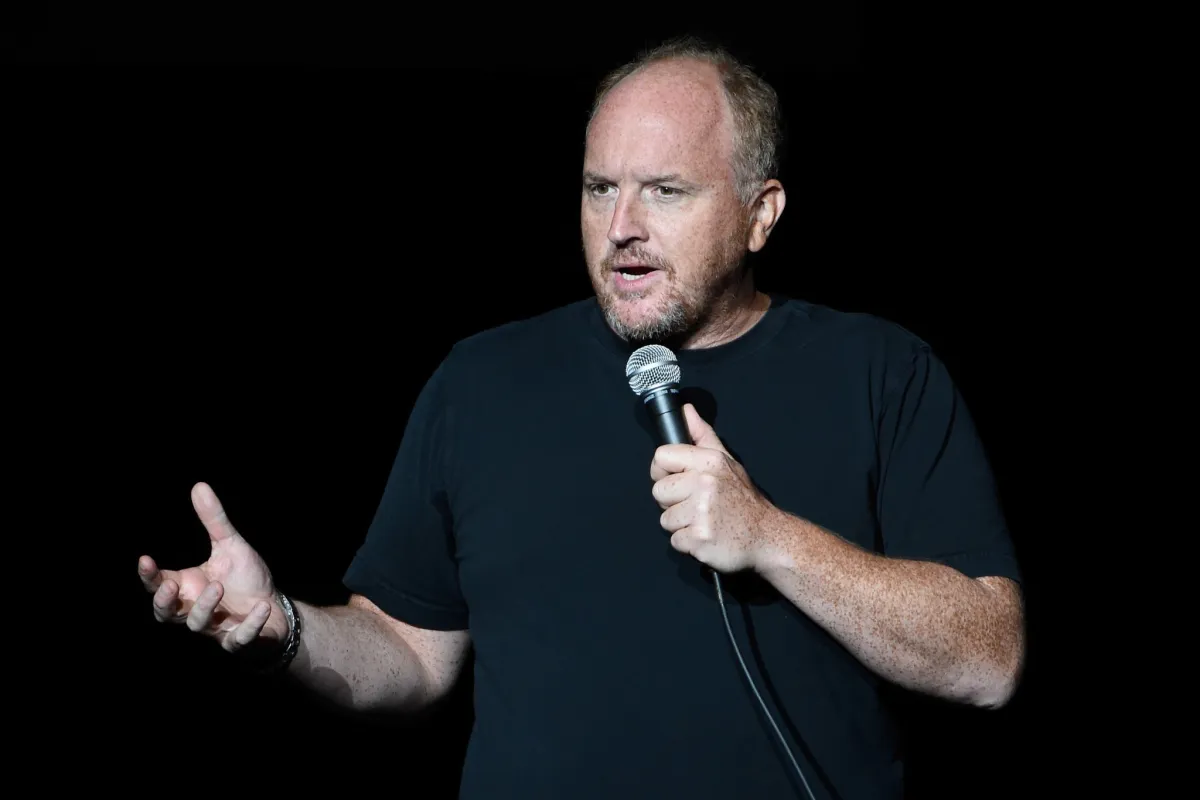 Photo: Louis C.K., via facts.net
Chris Rock's Selective Outrage special on Netflix in 2023 — timed with almost comical precision to the one-year anniversary of the Oscars slap heard round the world — was watched by 5.8 million households in its first day. Rock addressed the Will Smith situation directly, delivering the most-talked-about bit of the year. Whatever you thought about the content, the strategic timing was flawless. The conversation about Chris Rock went from 'victim of a public assault' to 'guy who clapped back brilliantly,' which is a significantly more powerful cultural position.
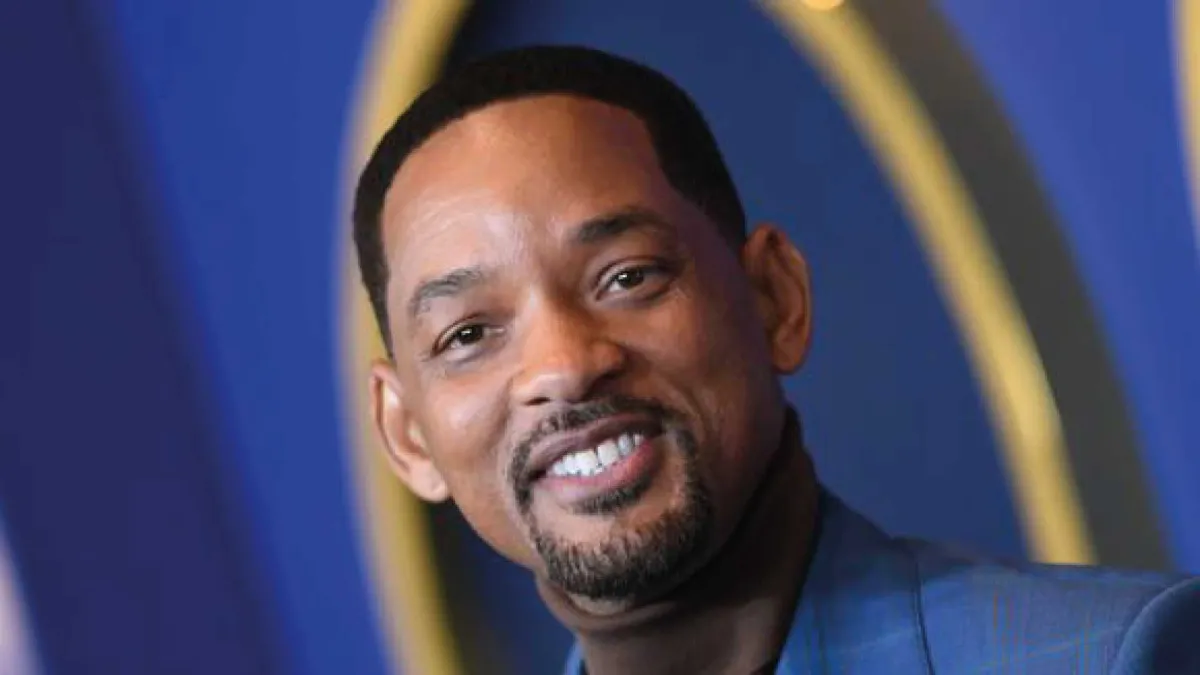 Photo: Will Smith, via www.laxmasmusica.com
 Photo: Chris Rock, via c8.alamy.com
James Corden — after a very public restaurant incident that resulted in him being briefly banned from a New York City eatery and a subsequent wave of 'he's actually always been like this' pile-on energy — used his Late Late Show farewell period to lean into self-deprecating humor about his reputation. The memes softened. The discourse shifted. He exited with considerably more goodwill than the restaurant incident had suggested was possible.
The through-line in every single case: the comedy did what the apology couldn't.
The Audience as Unpaid Studio Audience
Here is the part that should make you at least slightly uncomfortable: when you stream a celebrity comeback special, you are not a passive entertainment consumer. You are an active participant in their reputation reconstruction project. Your view counts. Your laugh counts. Your social media recommendation counts. Your 'okay I was mad at them but honestly that bit was hilarious' tweet counts.
You are, functionally, a member of the studio audience for someone's very expensive PR strategy — and unlike an actual studio audience, you paid for the privilege.
This is not necessarily a reason to stop watching. Comedy is comedy, and a genuinely funny special is a genuinely funny special regardless of the machinery behind it. But the awareness matters. The ability to laugh at something and hold a critical perspective on why you're being invited to laugh at it is not a contradiction. It's media literacy.
The Limits of the Format
The comedy special is not, it should be noted, an unlimited get-out-of-jail card. There are categories of behavior for which no amount of well-timed self-deprecation moves the needle — and the public has gotten better, if inconsistently, at identifying them.
The format also has an authenticity ceiling. If the special feels like it was written by a crisis communications team rather than a comedian, audiences can tell. The redemption arc requires at least the performance of genuine self-reflection, and performers who can't sell that authenticity find themselves in a worse position than before — having attempted the rehabilitation and failed, which tends to generate its own unflattering news cycle.
There's also the question of what happens after the special. The narrative rehabilitation only sticks if the behavior changes. A brilliant comeback special followed by another round of the original problem is, if anything, more damaging than the original incident — because now there's a record of someone claiming to have learned a lesson they clearly didn't.
The Verdict
The comedy special as reputation laundromat is one of the most elegant, effective, and genuinely underexamined phenomena in contemporary entertainment. It works because it's real entertainment. It works because laughter is a social and neurological event that bypasses our critical defenses. And it works because the celebrities deploying it are, in many cases, actually talented performers who can execute the strategy convincingly.
Are we all just paid studio audiences for someone's PR strategy? Sometimes, honestly, yes.
But the show is usually pretty good. And isn't that the whole problem?