Background No More: How Hollywood's Extras Turned Bit Parts Into Big Brands
Background No More: How Hollywood's Extras Turned Bit Parts Into Big Brands
For most of Hollywood's history, being a background extra meant one thing: existing as human wallpaper. You showed up, you walked past the camera at a predetermined pace, you did not — under any circumstances — look directly into the lens, and you went home having contributed to the visual texture of someone else's story without leaving so much as a traceable fingerprint on the industry.
Then smartphones happened. Then TikTok happened. And suddenly the furniture started filming back.
The Invisible Army That Learned to Make Itself Visible
Background extras — officially called "background performers" in SAG-AFTRA contracts, though almost nobody calls them that in casual conversation — have always been Hollywood's most invisible workforce. On any given production day in Los Angeles, thousands of them populate the edges of scenes, lending the illusion of a lived-in world to whatever story is being told in the foreground. They are, by design, not the point.
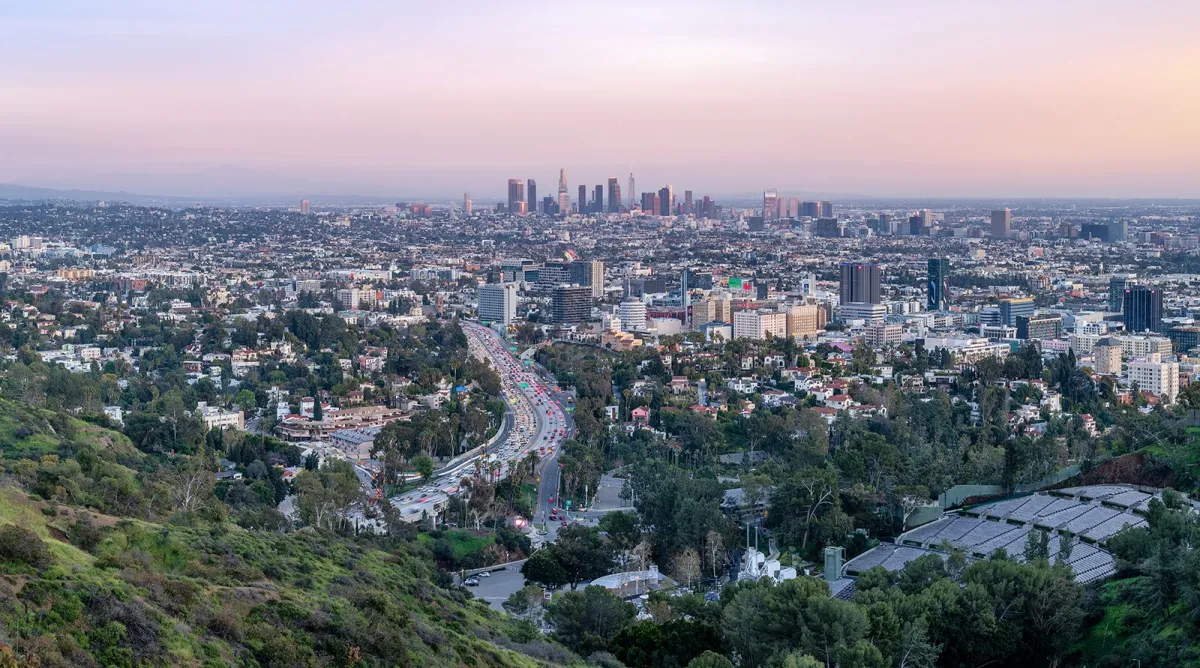 Photo: Los Angeles, via cdn.britannica.com
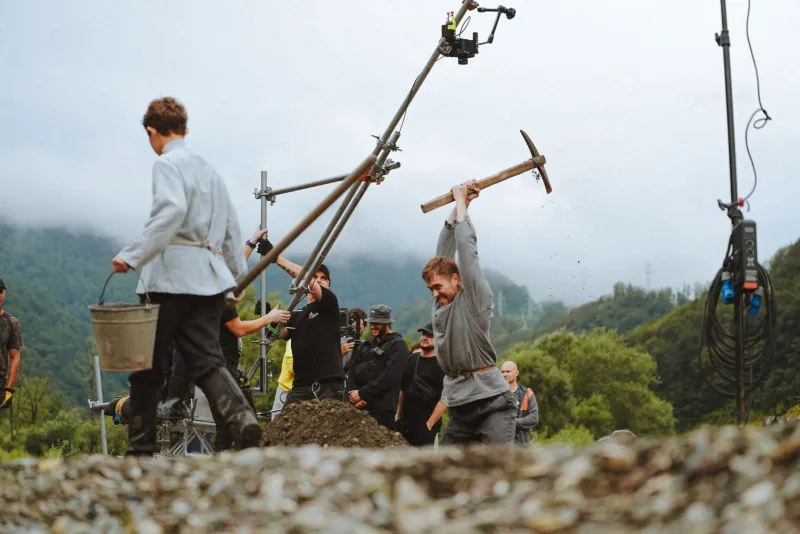
But somewhere around 2020, a funny thing started happening. Extras began documenting their days on set. A quick clip of the craft services table. A carefully framed shot that showed just enough of the production design to be tantalizing without violating NDA terms. A deadpan voiceover explaining the specific existential experience of sitting in holding for six hours waiting to walk past a lead actor for four seconds.
The internet, predictably, ate it up.
"People are fascinated by behind-the-scenes content," explains one background performer who has amassed over 800,000 followers across platforms by documenting her life as a full-time extra in Atlanta's booming film scene. "They want to know what it's actually like. Not the glamorous version. The real version, where you're in costume for nine hours and you eat lunch at 4 p.m. and you're not allowed to talk to the stars."
That authenticity — the unglamorous, unfiltered reality of Hollywood's lowest-paying tier — turned out to be enormously compelling content.
Atlanta, Albuquerque, and the New Hollywood Geography
The timing of this phenomenon is no accident. As major productions migrated from Los Angeles to tax-incentive-friendly states like Georgia, New Mexico, and New York, the pool of working extras expanded dramatically. Atlanta alone now runs multiple major studio productions simultaneously, employing thousands of background performers who might work five, six, seven different shows in a single month.
That volume of set access created an unprecedented content pipeline. An extra who works consistently in Atlanta might appear in the background of a Marvel series, a Netflix prestige drama, a network procedural, and a Hallmark movie — all in the same quarter. Each production is a new setting, a new costume, a new story to tell.
"I'm basically a travel blogger who only travels to fictional places," says one Atlanta-based extra with 400,000 TikTok followers, whose content ranges from costume department deep-dives to brutally honest assessments of which productions have the best craft services. (Consensus from multiple extra-content creators: streaming productions generally outclass network shows, and features outclass everything. The catering on a Marvel film, multiple sources confirm, is genuinely exceptional.)
The Brand Deal Pipeline Nobody Saw Coming
Here's where the story gets genuinely interesting from a business perspective: the follower counts that background performers built by documenting their set lives have translated into real commercial value that has absolutely nothing to do with their acting careers.
An extra with 500,000 engaged followers who cares about entertainment and pop culture is, from a brand perspective, essentially a mid-tier influencer with a very specific and desirable audience. Clothing brands, beauty companies, streaming services promoting their own shows, and even entertainment industry adjacent businesses — acting schools, audition coaching services, industry software platforms — have all come calling.
Some extras are now earning more from brand partnerships than from their actual background work. The math on this is genuinely staggering when you consider that SAG-AFTRA background rates, while regulated, are not exactly life-changing — typically $200 to $400 per day depending on the production and any bumps for special abilities or featured placement. A single sponsored post for a creator with a million followers can exceed that by a factor of ten.
"The background work got me the content," one creator explained. "The content got me the audience. The audience got me the brands. The brands pay my rent. The background work is now basically research."
Hollywood's Complicated Feelings About All of This
The industry's response to the rise of extra-influencers has been, to put it diplomatically, mixed.
Productions have tightened their phone policies on set, with some studios now requiring background performers to surrender devices during filming hours or sign enhanced NDA provisions that specifically address social media content. The concern is twofold: spoilers for unreleased projects, and the slightly thornier issue of background performers capturing footage that the production doesn't control.
But enforcement is inconsistent, and the content keeps flowing. For every production that locks down its set, there are three others where the background performers are quietly filming in holding, in costume, between takes — and the resulting content is generating publicity that the studio's own marketing department couldn't have bought.
This has created a fascinating gray area where some productions have quietly begun to embrace their extra-influencers, recognizing that organic, authentic set content from real workers is more credible and more viral than anything coming out of a marketing department. A few have even gone so far as to identify which background performers have significant followings and strategically place them in more visible positions.
This is, depending on your perspective, either savvy modern marketing or the most Hollywood thing that has ever happened.
The Fame Ladder Gets a New Bottom Rung
What the rise of extra-influencers really represents is a fundamental disruption of how fame gets manufactured and distributed in the entertainment ecosystem. For a century, Hollywood operated as a highly controlled pipeline: the studios decided who was visible, who got promoted, and who stayed in the background — literally.
Social media didn't just give extras a platform. It gave them a bypass. The blurry people in the background no longer need a casting director to notice them, a studio to sign them, or a publicist to spin their story. They can build their own audience, on their own terms, using access that the industry never thought to protect because it never imagined the furniture would want to be famous.
Some of them are parlaying those audiences into actual acting careers — using their follower counts as leverage in a casting landscape that increasingly treats social reach as a legitimate professional credential. Others are perfectly happy staying in the background professionally while building something entirely their own in the digital space.
Either way, the extras have stopped waiting for their close-up. They went ahead and filmed it themselves.